Can You Outsmart Everyday Science and Tech











Quiz Complete!
Everyday Science and Tech: The Hidden Rules Behind Your Routine

Most days you use a surprising amount of science without noticing. The moment you pick up a phone, you are holding a bundle of physics, chemistry, and computer science that would have seemed like science fiction not long ago. A touchscreen works because your finger changes an electric field on a thin layer that senses capacitance. The phone knows how you rotate it using tiny sensors called accelerometers and gyroscopes, which measure changes in motion and orientation. Even the simple act of unlocking your phone can involve cryptography, the math of keeping secrets, where your device proves it is really you without revealing your actual password to the outside world.
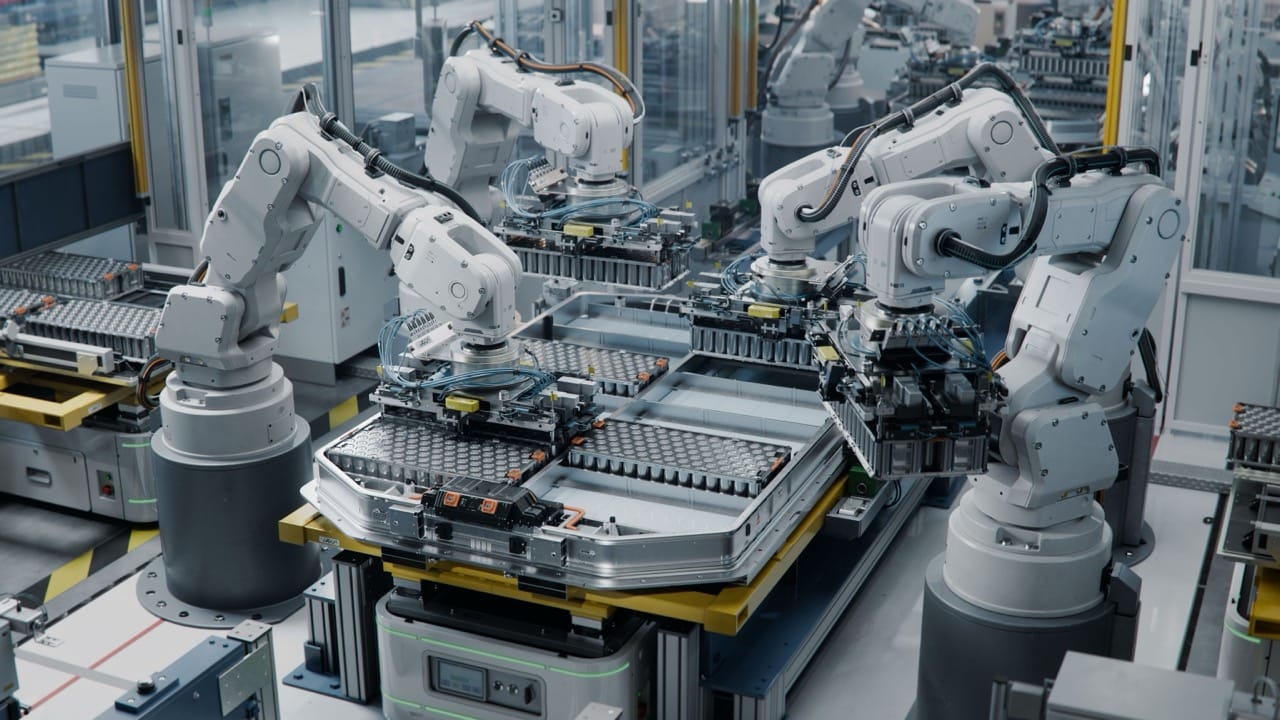
Your battery is another everyday marvel. Most modern phones and laptops use lithium ion chemistry, where lithium ions shuttle between two materials during charging and discharging. People often think batteries store electricity, but they really store chemical potential energy that can be converted into electrical energy when needed. Heat, age, and extreme charging habits can speed up battery wear because they encourage unwanted side reactions and physical changes in the electrodes. That is why a device left in a hot car or constantly pushed to 100 percent can feel like it loses capacity faster.
In the kitchen, science shows up in delicious ways. When bread turns brown in the toaster, it is not just burning. Much of that flavor and color comes from the Maillard reaction, a complex set of reactions between amino acids and sugars that creates hundreds of new compounds. Boiling water is also more subtle than it seems. Water boils when its vapor pressure matches the surrounding air pressure, which is why water boils at a lower temperature at high altitudes. That small change can affect cooking times and is one reason baking recipes sometimes need adjustment in mountain towns.
Your commute is full of engineering tradeoffs. Cars rely on friction for traction, but too much friction wastes energy as heat. Anti lock braking systems rapidly pulse braking pressure to keep tires from locking, helping you steer while slowing down. If you ride a train or use wireless earbuds on the way, you are benefiting from electromagnetism. Electric motors work because currents create magnetic fields and magnetic fields push on currents, turning electrical energy into motion. Wireless signals, from FM radio to Wi Fi and 5G, are all electromagnetic waves, differing mainly in frequency and how information is encoded.
Look up at the sky and you are seeing physics in action. The sky appears blue because molecules in the air scatter shorter wavelengths of sunlight more efficiently than longer wavelengths, a process called Rayleigh scattering. Sunsets look redder because the light travels through more atmosphere, scattering away more of the blues and leaving warmer colors. Weather forecasts, meanwhile, are powered by satellites, radar, and massive computer models that solve equations describing fluid motion. Forecasts have improved dramatically, but chaos in the atmosphere means tiny uncertainties today can grow into large differences later, which is why long range predictions are harder.
Modern medicine also sneaks into daily life. Antibiotics target bacteria, not viruses, which is why they do not cure colds. Vaccines train your immune system by showing it a harmless piece or pattern associated with a pathogen, so your body can respond faster later. Medical imaging is another blend of science and safety. X rays use high energy photons to see through soft tissue, while MRI uses strong magnetic fields and radio waves to map signals from hydrogen atoms in your body.
Behind almost everything digital is the internet, which is less a single thing and more a set of agreements. Data is broken into packets, labeled with addresses, and routed across many networks. If one path is busy or broken, packets can take another route and still arrive. When you stream a video or send a message, you are relying on time synchronization, error correction, and layers of protocols that quietly keep the system stable.
A quiz about everyday science and tech is really a quiz about noticing. The world is packed with small, testable ideas: how energy changes form, how information moves, how materials behave, and how clever design turns basic laws into useful tools. The fun part is realizing that the next brain teaser might be sitting in your pocket, simmering on your stove, or cruising overhead in the sky.