Inventors, Omens, and Sacred Tools Trivia










Quiz Complete!
Mythic Innovations: Inventors, Omens, and Sacred Tools in World Legends
Long before laboratories and patents, myths explained how the world gained its essential skills, tools, and bits of knowledge. These stories treat invention as something powerful and risky. A breakthrough might arrive as a stolen gift, a divine lesson, or a sacred object that works only if its rules are obeyed. The result is a global tradition of legends that sound surprisingly like early theories of technology, astronomy, agriculture, medicine, and craftsmanship.
The best known mythic “innovation” is fire. In Greek tradition, Prometheus steals it from the gods and gives it to humans, an act that frames technology as both liberation and transgression. Fire is not just warmth; it is metalworking, cooking, pottery, and the ability to reshape nature. Similar patterns appear elsewhere, where a culture hero or trickster brings a vital resource and pays a price. These tales often encode a social memory: new techniques can upend power, shift survival odds, and demand new rules.
Writing is another divine-grade upgrade. In Mesopotamian thought, scribal arts were bound to the gods; the deity Nisaba was linked with writing and accounting, reflecting how recordkeeping underpinned temples and trade. In Egypt, Thoth is credited with writing and measurement, tying literacy to calendars, rituals, and the orderly running of the cosmos. Myths about divine scribes suggest that writing felt like more than a tool. It was a sacred technology that could preserve names, fix contracts, and even influence the afterlife.
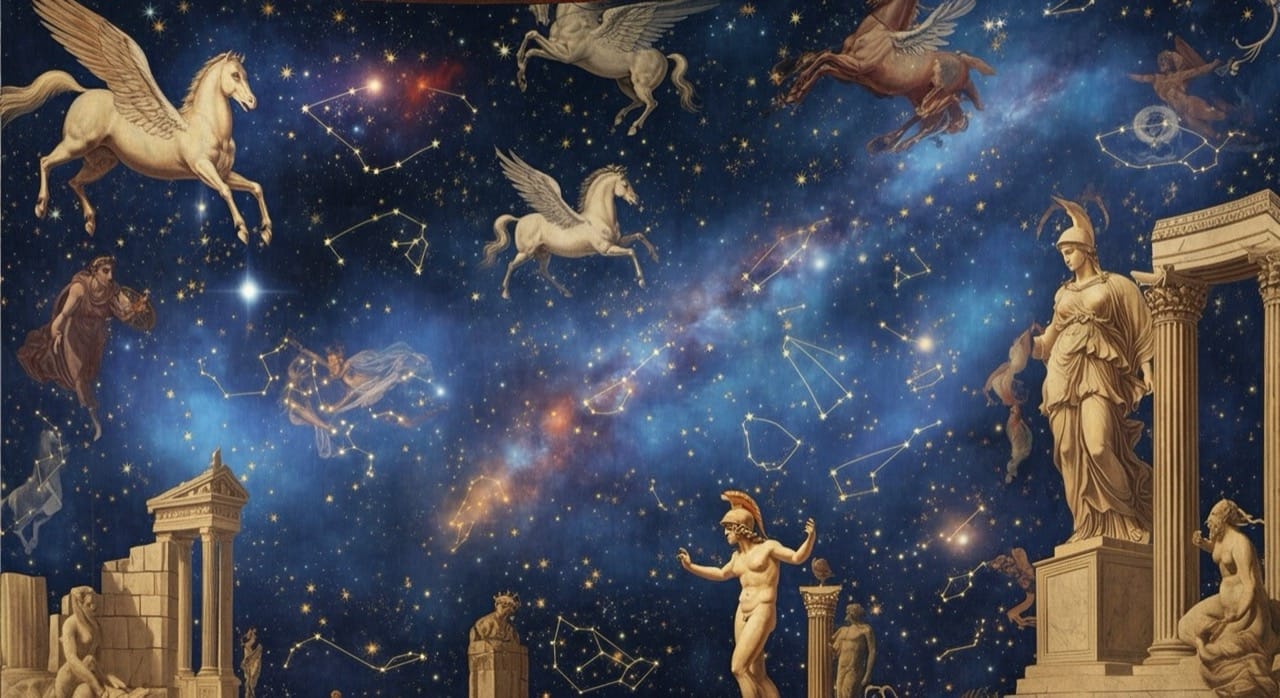
Timekeeping and astronomy often appear as “firsts” delivered by gods who keep the universe on schedule. In Mesoamerica, the Maya and Aztec traditions treat calendars as living systems with spiritual weight, where correct counting aligns humans with cosmic cycles. In many cultures, the movement of the sun, moon, and stars becomes a kind of celestial instruction manual. Myths about constellations and omens turn the sky into a readable text, teaching when to plant, when to travel, and when to fear a ruler’s downfall.
Agriculture myths portray farming as a hard-won bargain. Greek stories about Demeter and Persephone link seasonal change to loss and return, reflecting the anxiety of harvest dependence. Across the Andes, stories about Pachamama emphasize reciprocity with the land, as if agriculture only works when humans honor the living earth. These narratives highlight that food security is not merely technical; it is moral, communal, and ritual.
Medicine and craftsmanship also arrive through sacred channels. The Greek healer-god Asclepius embodies the hope that knowledge can defeat death, while also warning that some boundaries provoke divine backlash. Smithing gods such as Hephaestus in Greece or Ogun in Yoruba tradition show how metalwork looks like controlled magic: transforming stone into blades, tools, and plows. Even when a god is flawed or feared, the craft is indispensable.
Mythic tools often come with strict operating instructions, like dangerous prototypes. The underworld is frequently mapped by rules rather than roads: Orpheus can retrieve Eurydice only if he does not look back, turning a simple action into a catastrophic failure. In Japanese myth, Izanagi’s glance into the land of the dead triggers horror and pursuit. These stories treat knowledge and access as conditional. A single mistake, a single name, or a single forbidden act can flip a gift into a curse.
What makes these myths so enduring is their realism about innovation. New powers rarely arrive for free. They demand responsibility, sacrifice, and sometimes punishment. By turning inventions into stories of gods, omens, and sacred tools, ancient cultures explored the thrill and danger of learning something new, and they left behind a playful, tricky tradition where the smallest detail can change everything.