Halftones and Hype Pop Art True or False Xtreme Edition


Quiz Complete!
Halftones and Hype: How Pop Art Made the Ordinary Unforgettable

Pop Art is the art world’s loudspeaker: it takes the stuff you pass every day, ads, comics, packaging, celebrity photos, and turns it into images that feel impossible to ignore. It emerged in the mid 1950s and early 1960s as artists reacted to a world newly saturated with mass media. Television was becoming a household habit, glossy magazines multiplied, and consumer goods arrived with bright branding and persuasive slogans. Instead of treating this visual noise as the enemy of serious art, Pop artists treated it as raw material.
One of the movement’s biggest shocks was its attitude toward “high” and “low” culture. For a long time, fine art was expected to be unique, handmade, and elevated above commercial imagery. Pop Art blurred that boundary on purpose. A comic strip panel, a soup label, or a publicity still could be treated like a grand subject. Sometimes the result feels celebratory, like a love letter to modern life, and sometimes it feels like a critique of how images sell desire, identity, and even politics.
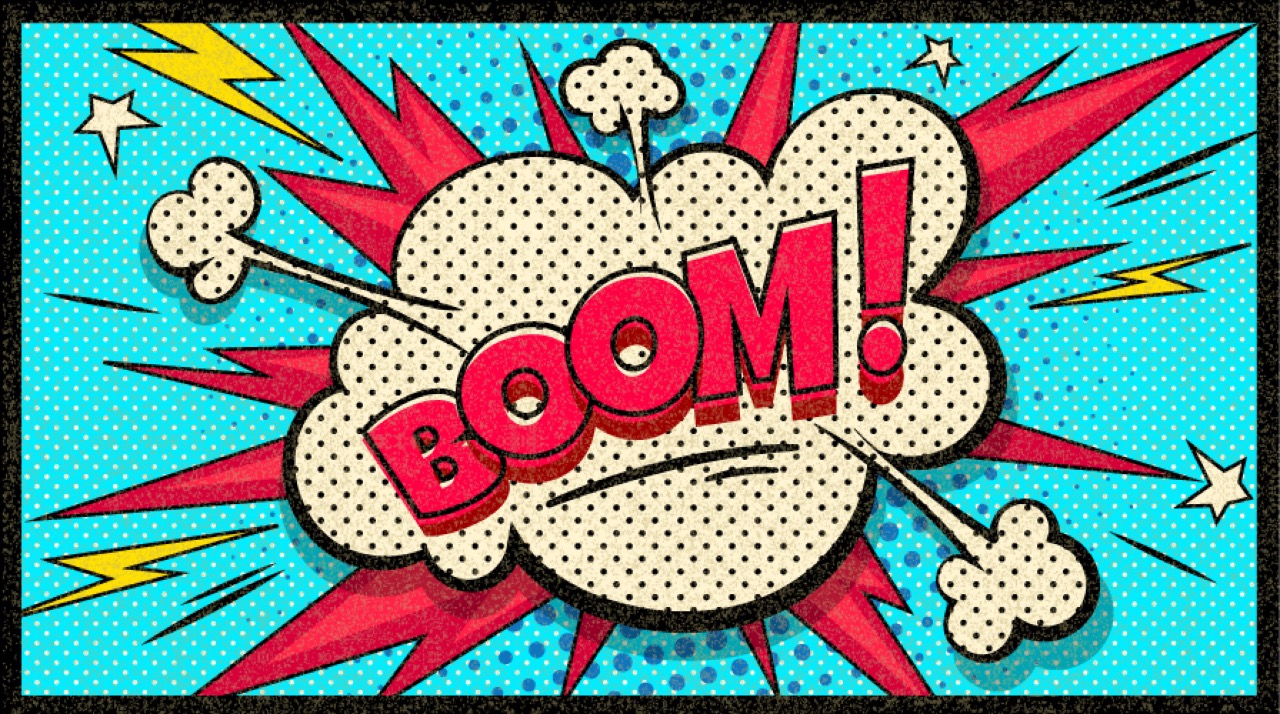
The look of Pop Art is often tied to printing and reproduction. Ben-Day dots, the tiny colored dots used in cheap commercial printing, became a signature texture when artists mimicked or enlarged them. Roy Lichtenstein is closely associated with this effect, turning comic-style scenes into large-scale paintings that look machine-made even when they are carefully crafted. The drama of a comic, a tear, an explosion, a speech bubble, becomes both funny and strangely distant when it’s blown up and stripped of its original story.
Screenprinting also became central, especially in the work of Andy Warhol. Screenprinting allowed images to be repeated with variations, emphasizing how celebrity faces and product logos circulate like currency. Warhol’s repeated portraits and consumer goods images lean into the idea that modern fame is manufactured and endlessly reproduced. The technique itself matters: slight misalignments, shifts in color, and imperfections make each print a reminder that even “mass-produced” images can carry a trace of accident and choice.
Although Pop Art is often linked to the United States, important roots lie in the United Kingdom. British artists in the 1950s were already sampling American advertising and science fiction imagery, exploring how consumer culture was reshaping everyday life. When Pop Art took off in America, it did so in a context of booming postwar consumption and a rapidly expanding media environment.
Not every Pop artist looked the same. Some leaned into clean, graphic punch, while others used softer edges or more chaotic compositions. Claes Oldenburg made oversized sculptures of ordinary objects, turning food and store items into playful monuments. James Rosenquist, who once painted billboards, used fragmented commercial imagery at massive scale, creating compositions that feel like you are inside an advertisement that has exploded into pieces.
Pop Art can be deceptively simple at first glance, which makes it perfect for a True or False challenge. A statement that sounds obvious might ignore the movement’s sly humor or its critical edge. Another claim that seems too strange might be accurate, because Pop Art thrives on the weirdness of modern life: the way a brand logo can feel as familiar as a family face, or how a comic panel can carry genuine emotion while also being a manufactured product. The more you know about its techniques, timelines, and key figures, the more you can spot the difference between a confident myth and a surprising truth.